
Views: 0 Author: Site Editor Publish Time: 2026-04-13 Origin: Site


Aluminum is widely used in windows, doors, and curtain walls because it is strong, lightweight, and durable. But it also transfers heat very quickly. That is why modern aluminum systems need a thermal barrier. A thermal barrier is the insulating section placed between the inner and outer aluminum parts to reduce heat transfer and improve overall energy performance.
When people compare different thermal barrier solutions, the real question is not only which material is better on paper. What matters more is how the barrier performs inside the full aluminum system, how it affects structural stability, and how well it supports long-term thermal efficiency in actual use.
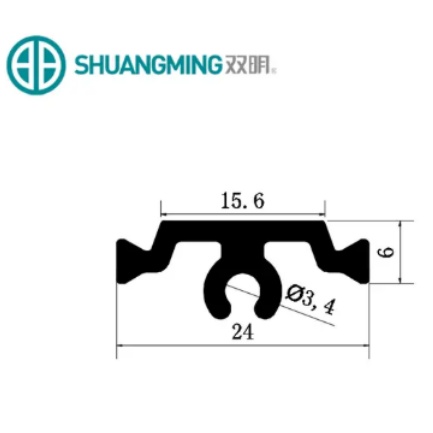
A polyamide thermal break is usually a preformed insulating profile inserted between two aluminum sections. In many cases, it is also called a polyamide thermal break strip. This type of barrier is widely used in aluminum windows, doors, and facades because it combines good insulation with strong mechanical performance.
One of the biggest advantages of polyamide is that it works as a precise, engineered component. It is not simply a filler. It is designed to fit the aluminum profile accurately, helping create a stable thermal break while supporting the final system’s long-term reliability.
A polyurethane thermal barrier is commonly created through a pour-and-debridge process. Instead of inserting a ready-made strip, the barrier material is poured into a cavity in the aluminum profile, allowed to cure, and then the metal bridge is removed to interrupt heat transfer.
This method creates a structural insulating section inside the profile. It is widely used in thermally improved aluminum framing and is often chosen by manufacturers whose production lines are built around poured thermal barrier processing.
The biggest difference is in how the barrier is formed.
Polyamide systems use preformed strips that are mechanically connected to the aluminum sections. Polyurethane systems create the barrier directly inside the profile during production. That means the comparison is not only about material type. It is also about production method, system design, and how the barrier becomes part of the finished frame.
This difference matters because thermal performance is influenced by more than conductivity alone. Barrier geometry, cavity shape, connection method, and manufacturing precision all affect the final result.
When comparing thermal efficiency, it is tempting to ask which material is better. But in practice, there is no universal answer. Both polyamide and polyurethane can deliver strong thermal performance when they are used in a well-designed aluminum system.
Polyamide performs well because it creates a reliable separation between interior and exterior aluminum sections while maintaining precise geometry and strong structural behavior. Polyurethane performs well because the poured barrier fills the designed cavity and can create an effective insulating section within the profile.
So the better question is not “Which material is always more efficient?”
The better question is “Which solution gives better thermal performance in this specific profile design?”
Polyamide is often favored in high-performance systems because it offers a strong balance between thermal insulation and structural stability. It is widely used in applications where precision, durability, and consistent profile performance are especially important.
Another reason polyamide is popular is that it expands and contracts in a way that works well with aluminum in properly designed systems. This helps support long-term dimensional stability and can be beneficial in demanding facade applications.
For many manufacturers, the availability of multiple strip geometries is also a major advantage. Polyamide systems offer flexibility in design, making them suitable for different window, door, and curtain wall requirements.
Polyurethane remains a strong option because the poured-and-debridged method can create an effective thermal barrier directly inside the aluminum profile. For some manufacturers, this production method fits their fabrication process better than using preformed strips.
It can also be attractive in applications where the cavity design is already optimized for poured barrier processing. In these cases, polyurethane systems can deliver strong thermal performance while also supporting structural needs.
One of the most common mistakes in this comparison is focusing only on the raw material name. In real projects, thermal efficiency depends on several factors working together:
A wider or better-optimized barrier can improve insulation performance, regardless of whether the system uses polyamide or polyurethane.
The way the aluminum profile is designed has a major impact on heat flow. Even an excellent barrier material cannot fully compensate for a poor cavity layout.
A well-designed barrier still depends on consistent manufacturing quality. Poor tolerances, weak connections, or unstable processing can reduce final performance.
Glazing, seals, frame configuration, and overall facade design all affect the final thermal result. That is why the barrier should always be evaluated as part of the full system, not as a standalone material.
A thermal barrier is expected to reduce heat transfer, but it also needs to support the integrity of the aluminum system. This is especially important in larger windows, commercial doors, and curtain walls, where the barrier plays a role in the profile’s overall behavior.
Polyamide systems are often valued for their mechanical connection and dimensional precision. Polyurethane systems are often valued for their structural insulating properties in poured-and-debridged assemblies. In both cases, a thermal barrier must do more than insulate. It has to remain reliable over time.
Curtain walls usually place higher demands on the thermal barrier because they involve larger framing systems, greater exposure, and stricter energy performance goals. In these applications, polyamide thermal break strips are commonly used because they offer precision, durability, and strong compatibility with high-performance facade systems.
Polyurethane systems can also be used in thermally improved aluminum framing, especially when the manufacturing process is based on pouring and debridging. The right choice depends on the curtain wall design, the required thermal target, and the production method the manufacturer is set up to use.
In windows and doors, both solutions can perform well. Polyamide is often chosen when manufacturers want preformed, highly consistent insulating profiles and more design flexibility in strip geometry. Polyurethane is often chosen when the production process favors poured thermal barriers.
For premium systems, the final decision usually comes down to balancing thermal performance, structural needs, fabrication method, and long-term durability.
If the question is asked in the simplest way, the answer is this:
Neither polyamide nor polyurethane is automatically better in every case.
Polyamide may be the better choice when a project needs precise engineered strips, strong structural performance, and broad design flexibility. Polyurethane may be the better choice when a poured barrier process fits the profile design and manufacturing method more naturally.
So instead of choosing based only on material type, buyers and manufacturers should compare the actual system performance, application needs, and production compatibility.
A practical way to choose is to focus on five questions:
Start with the target insulation level. If the project demands a high-performance aluminum system, the thermal barrier must support that goal effectively.
Some profiles are better suited to polyamide strips, while others are more compatible with a poured polyurethane process.
For large windows, doors, and curtain walls, the barrier must support long-term structural reliability as well as insulation.
A strong thermal barrier solution should fit naturally into the manufacturer’s fabrication process.
Polyamide often offers broader geometry options. Polyurethane often offers manufacturing convenience for specific poured systems.
When comparing polyamide thermal break systems with polyurethane thermal barriers, the smartest approach is not to look for a one-size-fits-all winner. Both are proven solutions for improving aluminum system performance. The real difference lies in how they are used, how the profile is designed, and how well the finished system performs in practice.
For many high-performance windows, doors, and curtain walls, polyamide thermal break strip solutions are widely preferred because they combine good insulation, structural stability, and precise engineered design. Polyurethane, however, remains a strong and practical choice in many poured-and-debridged systems.
In the end, the best thermal barrier is the one that matches the system design, performance goals, and manufacturing process of the project.


