
Views: 0 Author: Site Editor Publish Time: 2026-03-04 Origin: Site


In modern building systems, energy performance is no longer treated as an optional upgrade. It has become a basic expectation in windows, doors, curtain walls, and many aluminum profile applications. When people look at a finished frame, they often focus on the visible surface, the glass, or the hardware. But one of the most important performance components is usually hidden inside the profile structure: the thermal isolation strip. This small but critical part plays a major role in reducing heat transfer, improving insulation performance, and helping the entire system feel more stable and comfortable in everyday use.
From our perspective as a manufacturer, a thermal isolation strip is not just a connector placed between two pieces of metal. It is a functional component that helps transform a standard aluminum profile into a more efficient, higher-performing system. In practical applications, these strips are widely used in thermal break doors, windows, curtain walls, and other profile systems where energy control, structural performance, and dimensional stability matter. In this article, we will explain what thermal break strips are, how they work, why they are important, and what buyers should look for when selecting the right solution for their project.
Thermal break strips, also called thermal isolation strips, are non-metallic strips inserted between the interior and exterior sections of a metal profile—most commonly aluminum profiles. Their main purpose is to interrupt the direct transfer of heat through the frame.
Without a thermal break, aluminum profiles conduct heat quickly because metal is naturally highly conductive. This means:
outdoor heat can transfer inward more easily in warm conditions
indoor heat can escape more easily in cooler conditions
the frame becomes a direct path for temperature exchange
A thermal isolation strip helps reduce this direct heat path by separating the metal profile into two sections and connecting them with a lower-conductivity material.
In simple terms, thermal break strips create a barrier inside the profile structure, helping the frame perform more efficiently.
Aluminum is widely used because it is:
strong
lightweight
corrosion-resistant
easy to process
suitable for modern profile design
But aluminum also transfers heat quickly. That is one of the main reasons thermal break strips are so important in aluminum window and door systems.
A standard metal frame can allow rapid heat transfer from one side to the other. This can reduce the insulation performance of the full system.
The strip interrupts this transfer path, helping the frame function as a better insulating structure.
This is why thermal break strips are commonly used in:
windows
doors
curtain walls
façade systems
industrial aluminum profile structures where thermal separation is needed
In many cases, the thermal isolation strip is one of the key components that helps an aluminum system move from standard construction to higher-performance construction.
A thermal break strip works by separating two conductive metal sections with a lower-conductivity material. Instead of allowing heat to move directly through one continuous metal path, the strip interrupts that path.
A thermal break strip:
Connects two aluminum profile sections mechanically
Separates those sections thermally
Reduces direct heat conduction through the frame
This means the strip must do two things at the same time:
provide structural connection
provide thermal separation
That is what makes the product so important. It is not simply filler material—it is an engineered profile component that affects both energy performance and profile integrity.
Profile Type | Heat Transfer Path | Result |
Standard aluminum profile | direct metal-to-metal path | faster heat transfer |
Thermal break profile | interrupted path through strip | reduced heat transfer |
This structural interruption is the reason the thermal isolation strip has become such a standard component in higher-performance profile systems.
A thermal isolation strip must balance multiple requirements:
low thermal conductivity
good mechanical strength
dimensional stability
reliable bonding with profile systems
long-term performance under changing temperatures
That is why these strips are typically made from engineered non-metallic materials rather than ordinary plastics.
In practical manufacturing, buyers often expect thermal break strips to offer:
stable shape retention
dependable processing behavior
compatibility with aluminum profile assembly
resistance to deformation during production and use
The exact material formulation can vary, but the purpose remains the same: to provide a durable insulating bridge between two sections of a metal profile.
A thermal break strip is most commonly used in aluminum building systems where profile performance matters.
Aluminum windows
Aluminum doors
Curtain walls
Sliding systems
Facade systems
Industrial profile assemblies requiring thermal separation
These applications often need a combination of:
structural strength
design flexibility
improved thermal control
long-term dimensional reliability
Because aluminum remains a preferred frame material in modern construction, the thermal isolation strip has become an essential part of how these systems are upgraded for better overall performance.
The purpose of thermal break strips is practical. They help improve how the full frame system performs in real-life use.
This is the main function. The strip interrupts direct conduction through the metal structure.
The performance of a window or door is not only about the glass. The frame matters too, and thermal break strips help improve the frame’s role in the full system.
Frames that reduce rapid temperature transfer can contribute to a more stable indoor environment.
Thermal break strips allow aluminum systems to offer improved profile performance while keeping the structural advantages of metal.
Many construction projects now expect better thermal control, and thermal break strips help aluminum systems meet those expectations more effectively.
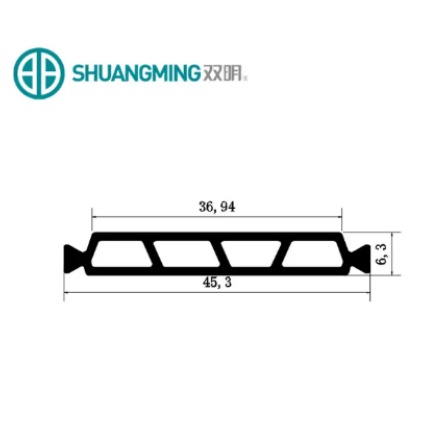
Although the primary purpose is thermal separation, the strip also plays a structural role. It must connect the two aluminum sections as part of the profile assembly.
That means a thermal isolation strip needs to support:
profile connection stability
dimensional consistency
assembly reliability
resistance to movement or distortion during production and use
So the strip is not only an insulating part. It is also part of the profile’s structural design. If the strip quality is poor, the final system may face problems such as:
poor assembly fit
profile instability
inconsistent dimensions
reduced long-term reliability
This is why quality matters greatly when selecting thermal break strips.
A thermal break strip affects not only finished product performance, but also the manufacturing process itself.
more stable profile assembly
smoother processing
consistent dimensions
reduced variation between batches
better final product uniformity
assembly difficulties
unstable fit
profile alignment issues
dimensional inconsistency
reduced confidence in final system performance
For manufacturers, the thermal isolation strip is not just a material purchase. It is part of quality control, production stability, and finished product reputation.
If you are selecting a thermal isolation strip, it is helpful to focus on practical performance rather than only basic specifications.
Selection Factor | Why It Matters |
Dimensional consistency | supports stable profile assembly |
Material stability | helps long-term reliability |
Processing compatibility | improves manufacturing efficiency |
Structural connection performance | supports profile integrity |
Thermal separation function | improves insulation role |
Product quality consistency | reduces production variation |
A reliable strip should be easy to integrate into profile production and offer stable performance over time.
So, what are thermal break strips? They are specialized thermal isolation strips used inside aluminum profiles to interrupt direct heat transfer while maintaining structural connection between profile sections. In practical use, they help improve insulation performance, reduce thermal conductivity through the frame, and support more advanced aluminum window, door, and curtain wall systems. Although they are small compared with the full finished product, they play a major role in how the final system performs, both in production and in everyday building use.
At www.shuangming-plastic.com, we understand that high-quality profile performance starts with reliable components. A well-made thermal isolation strip can make a meaningful difference in processing consistency, system stability, and overall product value. If you are looking for dependable thermal break strip solutions for aluminum profile applications, you are welcome to visit www.shuangming-plastic.com to learn more.
The main purpose of a thermal isolation strip is to reduce direct heat transfer between the inner and outer sections of a metal profile while keeping them structurally connected.
No. Thermal break strips are commonly used in windows, doors, curtain walls, sliding systems, and other aluminum profile applications that require thermal separation.
Because aluminum transfers heat quickly, and a thermal isolation strip helps interrupt that heat path, improving the frame’s overall insulation role.
Yes. A good thermal isolation strip supports better assembly stability, dimensional consistency, and more reliable final product performance.

