
Views: 0 Author: Site Editor Publish Time: 2026-04-03 Origin: Site


A polyamide thermal break is a non-metallic barrier inserted between the inner and outer aluminum sections of a frame system. Its job is to interrupt the direct path of heat flow through aluminum, which is naturally highly conductive. In practical terms, it helps aluminum windows, doors, curtain walls, and façade systems achieve much better thermal insulation performance than non-insulated metal frames.
In the fenestration and façade industry, the term is often used in two ways. Sometimes it describes the thermal barrier function inside a metal profile system. Sometimes it refers more specifically to the polyamide component itself, which is also commonly called a polyamide thermal break strip. Both expressions are widely associated with thermally improved aluminum framing systems designed for energy efficiency, condensation control, and structural reliability.
Aluminum is valued for its strength, light weight, and durability, but it transfers heat quickly. Without a thermal barrier, indoor and outdoor temperatures can pass through the frame much more easily, increasing energy loss in winter and heat gain in summer. A polyamide thermal break reduces this transfer by separating the two aluminum sections with a material that has much lower thermal conductivity.
In a thermally broken aluminum profile, the exterior aluminum section and the interior aluminum section are mechanically connected through polyamide strips instead of continuous metal. This separation creates an insulating zone inside the frame assembly. Because the metal is no longer uninterrupted from outside to inside, the frame performs better in thermal insulation and helps reduce the risk of interior surface condensation.
This design is especially important for modern buildings that demand higher energy performance. Whether the application is a residential window, a commercial curtain wall, or an industrial aluminum assembly, using a polyamide thermal break can support better indoor comfort, lower HVAC loads, and more stable performance across changing climates.
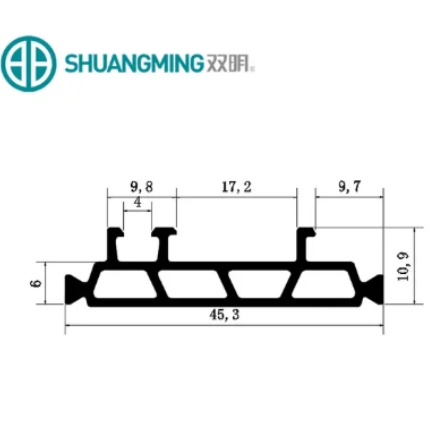
A polyamide thermal break strip is the profile-shaped polyamide insert used inside thermally broken aluminum systems. It is usually produced in precise shapes and dimensions so it can interlock with aluminum profiles during the rolling or assembly process. In other words, the strip is the physical component that enables the thermal break function.
The phrase polyamide thermal break is broader and can describe the concept, the function, or the overall thermal barrier section in a frame. The phrase polyamide thermal break strip is more product-specific and is often the better keyword when discussing manufacturing, profile shapes, dimensions, materials, and supplier selection.
These strips are commonly used in aluminum windows, sliding doors, hinged doors, curtain wall systems, and façade profiles. They are especially important in high-performance systems where both structural strength and thermal insulation are required.
Polyamide is widely used because it offers a practical combination of insulating performance, mechanical strength, processability, and long-term stability. In thermal barrier applications, the material must do more than resist heat flow. It must also withstand loads, temperature changes, humidity exposure, and long-term service conditions inside metal framing systems. EN 14024 specifically addresses mechanical assessment and conditioning effects for thermally separated metal profiles, which reflects how critical the barrier material is to the overall system.
PA66 is one of the most common base materials for this application because it can deliver a strong balance of stiffness, durability, and thermal performance. When reinforced with glass fiber, it becomes even more suitable for demanding framing systems that need improved dimensional stability and mechanical strength.
Glass fiber reinforcement is used to strengthen the polyamide material. According to technical material information from Ensinger, glass fiber reinforced PA66 provides higher strength, rigidity, creep strength, and dimensional stability than unfilled material. Those characteristics are highly relevant in thermal break strips because the strips must maintain shape and structural integrity inside aluminum profiles over time.
One of the biggest benefits is improved thermal insulation. By interrupting heat flow through the aluminum frame, the thermal break helps the full window, door, or façade system achieve better thermal performance. This contributes to lower heating and cooling demand and supports more energy-efficient building envelopes.
Another key advantage is condensation reduction. When interior frame surfaces stay warmer, there is less chance that moisture in indoor air will condense on the metal. This can improve comfort and help reduce problems linked to water droplets, surface dampness, or mold-prone conditions near poorly insulated frames.
Polyamide thermal break strips also support structural performance. Thermal barriers in framing systems are not just insulators; they are part of the connection between aluminum sections. Industry standards and technical reports emphasize the importance of mechanical properties, conditioning, and structural testing for these composite systems.
Most high-quality thermal break strips are made from polyamide 66, often with glass fiber reinforcement. In the market, reinforced grades such as PA66 GF are widely recognized because they combine good insulation with stronger mechanical behavior. Different formulations may be used depending on the required strength, weather resistance, processing method, and end-use environment.
The quality of the base resin and reinforcement directly affects strip consistency, dimensional tolerance, long-term stability, and strength. For manufacturers and buyers, raw material control is therefore a major factor in product reliability. A thermal break strip that looks similar on the surface may still perform very differently depending on formulation, compounding quality, and process control.
Polyamide thermal break strips are typically produced through a controlled extrusion process. The material is compounded, melted, shaped through dies, cooled, and cut into specific dimensions. Because the strips need to fit accurately into aluminum profile systems, dimensional precision and consistency are essential throughout production.
In many cases, the production chain begins with compounding the polyamide formulation, including the resin base and reinforcement system. Proper compounding helps achieve stable mechanical and processing properties.
The material is then extruded through a die to form the required strip geometry. This is where the final shape, slot design, and profile dimensions are created.
After extrusion, the strip is cooled and stabilized before being cut to required lengths or packaged in coils or discs depending on product type and downstream use.
Inspection may include dimensional checks, appearance checks, and performance testing. Since thermal break strips are used in structural aluminum systems, process consistency is a major quality factor.
When evaluating a polyamide thermal break strip, buyers usually focus on both thermal and mechanical performance. The strip must reduce heat transfer, but it must also maintain its shape and strength under real service conditions.
Mechanical strength is critical because the strip connects aluminum sections and must resist loads during fabrication and use. EN 14024 covers mechanical strength assessment and includes tests related to transverse tensile strength, shear behavior, conditioning effects, and ageing.
Good dimensional stability helps ensure reliable assembly and long-term compatibility with aluminum profiles. Glass fiber reinforced PA66 is valued in part because of its improved rigidity and stability.
Thermal barrier materials may be exposed to humidity, water, UV conditions in some cases, and long-term loading. That is why standards for thermal barrier systems consider conditioning and ageing performance rather than only initial strength values.
Polyamide thermal break strips are most commonly found in aluminum systems used for building envelopes.
They are widely used in casement windows, sliding windows, folding doors, and hinged doors where thermal insulation has become a standard requirement in many markets.
In curtain wall and façade systems, thermally broken profiles help improve the overall envelope performance of commercial buildings while preserving the structural and aesthetic advantages of aluminum.
In addition to mainstream architectural use, thermal break strips can also appear in specialized industrial profiles where temperature separation or improved insulation is needed.
Polyamide is often preferred in high-performance systems because it balances thermal insulation with mechanical capability. In many framing applications, the thermal barrier is expected to contribute to structural performance as well as thermal improvement, so the material choice cannot be based on insulation alone. Technical guidance from FGIA on composite thermal barrier framing systems highlights that material selection, cavity design, and structural and thermal performance testing all matter in system design.
Compared with lower-performance or non-structural alternatives, reinforced polyamide is often favored where strength, dimensional control, and long-term durability are essential. The exact choice still depends on system design, code requirements, climate, and manufacturing method.
Standards are important because they give buyers, fabricators, and system designers a way to evaluate whether the thermal barrier can perform safely and consistently.
EN 14024 is a major reference for metal profiles with thermal barriers. It specifies requirements for assessing mechanical strength and includes testing related to conditioning, ageing, and performance of the connection. For suppliers serving international markets, compliance with this type of standard is a strong signal of technical credibility.
AAMA TIR-A8 addresses structural performance considerations for composite thermal barrier framing systems and covers subjects such as cavity design, material selection, and structural and thermal performance testing. This makes it especially relevant in the North American market.
For most modern aluminum window, door, and curtain wall systems, the answer is yes. Polyamide thermal break strips help transform aluminum framing from a highly conductive assembly into a more energy-efficient and performance-oriented system. They support better thermal insulation, help reduce condensation, and contribute to the mechanical reliability of thermally broken profiles when properly designed and manufactured.
While they add complexity compared with non-insulated aluminum systems, they are widely used because the long-term gains in energy performance, comfort, and system quality are significant.
A polyamide thermal break is a critical insulating barrier used in aluminum framing systems to reduce heat transfer between interior and exterior metal sections. When produced as a polyamide thermal break strip, it becomes a precision component that supports both thermal insulation and mechanical connection inside windows, doors, curtain walls, and façade profiles.
For buyers, fabricators, and project developers, understanding the material behind the strip is essential. High-quality polyamide, especially reinforced PA66 grades, offers the combination of strength, rigidity, and dimensional stability needed for demanding applications.
In short, if you want aluminum systems with better energy efficiency, improved condensation control, and more dependable long-term performance, polyamide thermal break strips are one of the most important components to get right.


