
Views: 0 Author: Site Editor Publish Time: 2026-10-08 Origin: Site


Aluminum dominates modern commercial and residential architecture today. It offers incredible structural durability alongside sleek aesthetic appeal for building facades. However, building engineers face a fundamental engineering challenge because aluminum conducts heat rapidly. Unbroken aluminum profiles act as massive energy leaks. This physical reality makes traditional metal frames completely inefficient for modern energy standards. We must find a reliable way to stop this thermal loss without sacrificing structural integrity.
Enter polyamide thermal break strips. They act as precise structural insulators bridging the inner and outer aluminum frames to halt heat transfer dead in its tracks. This guide provides a technical evaluation framework for procurement managers, architects, and window manufacturers. You will discover exactly how these components work, why specific materials matter, and how to assess supplier extrusion quality accurately.
Polyamide thermal break strips physically separate aluminum profiles to drastically lower U-values while maintaining structural integrity.
Glass-filled polyamide (specifically PA66 GF25) is the industry standard due to its exact matching of aluminum's linear thermal expansion coefficient.
Profile geometries (such as I-shape, C-shape, and IC-shape) dictate both structural strength and convection control within the window cavity.
Evaluating a supplier requires verifying their extrusion temperature controls (to prevent material degradation) and outdoor chemical resistance testing protocols.
Continuous aluminum acts like a superhighway for heat. In winter, precious indoor warmth easily travels outside through the solid metal frame. During summer, scorching outdoor heat moves indoors just as fast. We call this physical phenomenon a "thermal bridge." It forces HVAC systems to work overtime to maintain comfortable indoor temperatures. Over time, atmospheric moisture also condenses on these cold interior metal surfaces. This persistent condensation damages adjacent drywall and promotes dangerous mold growth inside the building envelope.
Engineers solve this by inserting a low-thermal-conductivity material between two separate aluminum extrusions. This creates a literal physical gap. The physical barrier forces thermal energy to stop moving through the frame entirely. Inserting high-quality thermal break strips dramatically reduces the overall K-value or U-value of the entire fenestration system. Instead of traveling freely, thermal energy hits a dead end. This simple interruption turns a highly conductive metal window into a highly efficient energy-saving barrier.
Many people mistakenly assume an insulator only manages temperature. However, it must also perform as a critical load-bearing structural component. The insert physically holds the heavy inner and outer metal frames together safely. It must endure extreme wind loads pushing violently against the building exterior. It also supports the massive dead weight of double or triple-glazed glass units. A weak insulator will shear or snap under everyday pressure. Therefore, achieving strict structural symbiosis between the metal and the polymer remains absolutely essential.
Metal and plastic usually react completely differently to temperature changes. Most plastics expand significantly when heated. They shrink drastically when frozen. Aluminum expands at a much lower, more stable rate. If you bond two materials having drastically different expansion rates, they will eventually shear. They warp or cause total structural seal failure during extreme temperature fluctuations. PA66 reinforced by exactly 25% fiberglass solves this beautifully. It expands and contracts at virtually the identical rate as aluminum. This crucial thermal expansion parity represents the most critical operational fact for modern window design.
Outdated alternatives fail predictably under modern building demands. Polyvinyl chloride (PVC) and standard polyurethane lack necessary long-term structural rigidity. They become dangerously brittle over time. Glass-filled polyamide offers exceptionally high tensile strength. It acts almost like a lightweight metal under pressure. Window manufacturers also value its remarkably high melting point. Assembly often requires powder-coating the fully joined aluminum profiles. PA66 GF25 easily survives 200°C powder-coating oven temperatures. Standard commercial plastics would melt or severely deform under these exact same manufacturing conditions.
Building facades endure harsh environmental abuse daily. Component materials must resist constant UV radiation from direct sunlight. They face heavy moisture from blowing rain and snow. In coastal or urban areas, alkaline and acidic elements attack the window frames constantly. PA66 GF25 possesses inherent chemical resistance to these severe outdoor environments. It does not degrade, rot, or lose its core mechanical properties over time. This impressive chemical stability ensures decades of structural reliability for the entire fenestration system.
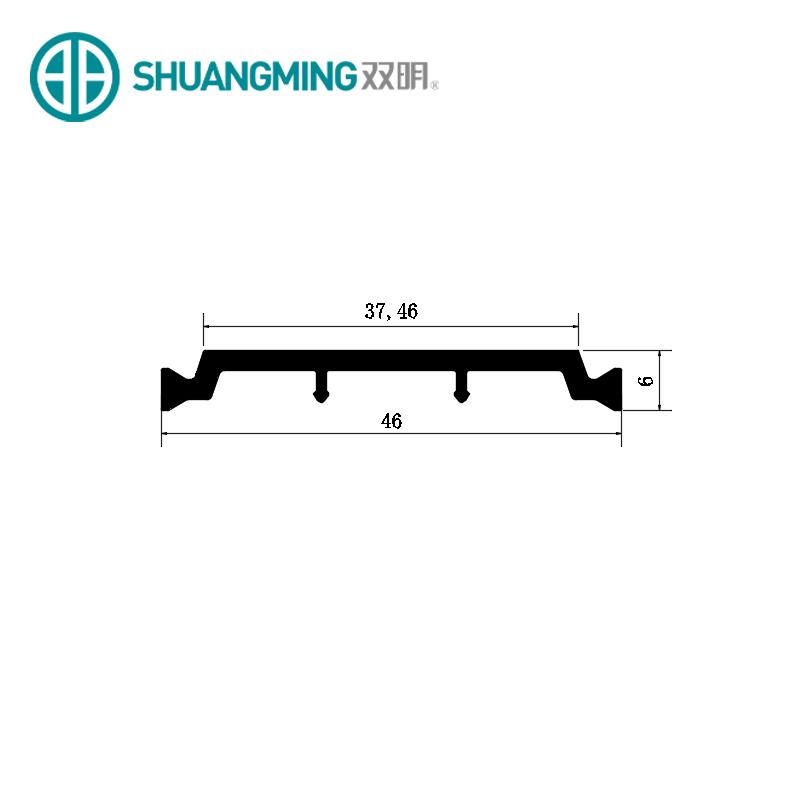
The I-shape represents the foundational geometry in thermal insulation. Imagine a simple, flat bridge connecting two metal sides. Manufacturers often use a standard 30mm width for basic commercial applications. It works perfectly for standard insulation requirements. The straight vertical lines allow straightforward structural bonding during the mechanical knurling and rolling process. However, it leaves the internal hollow cavity of the window frame completely open. This open space allows air to circulate freely inside.
Engineers developed the C-shape specifically to improve upon the basic flat design. Heat does not just travel through solid materials. It also moves via radiation and convection inside hollow window chambers. A C-shape extends the physical heat transfer path deliberately. It forces thermal energy to travel much further through the polymer. Its curved profile also begins blocking internal cavity radiation effectively. It disrupts internal air currents far better than any standard flat I-shape could achieve.
Modern passive-house standards demand even greater thermal performance today. This strict demand drove the engineering rationale behind IC-type geometries. An IC-shape combines the very best traits of previous designs. It retains the immense structural rigidity found in a solid I-shape. It also successfully integrates the convection-blocking fins of a C-shape. These fins create multiple smaller chambers inside the aluminum profile. Smaller chambers restrict air movement drastically. This evolution achieves passive-house-level thermal performance. It does so without compromising vital structural load capacities.
Table 1: Thermal Break Geometry Characteristics
Profile Type | Primary Application | Internal Convection Control | Structural Rigidity Level |
|---|---|---|---|
I-Shape | Standard residential windows | Low | Very High |
C-Shape | Upgraded commercial insulation | Medium | High |
IC-Shape | Passive house certification systems | Maximum | Very High |
Manufacturing precise polymers requires intense, continuous heat control. We must discuss the hidden risk of polyamide material degradation. This silent failure happens during the plastic extrusion process. If a factory uses poor temperature controls, the actual polymer chain breaks down permanently. You cannot easily see this microscopic damage. The resulting brittle strip often passes basic visual inspection on the factory floor. However, it will inevitably fail under real-world wind loads. Buyers must audit their supplier's extrusion temperature monitoring systems closely.
You should never trust visual appearance alone. Request standardized testing data directly from your manufacturing partners. Reliable suppliers will gladly provide thick documentation proving long-term durability. You need to see exactly how their materials withstand outdoor chemical exposure. They test this using rigorous accelerated aging cycles in laboratory settings.
Always ask for the following verification steps:
Review the accelerated UV aging test results comprehensively.
Check the specific material's response to high-alkaline environments.
Verify absolute tensile strength retention after 1,000 hours of continuous moisture exposure.
Precision stands as a strict, non-negotiable evaluation criterion. Extruding plastics involves highly complex cooling dynamics. The material can shrink unevenly upon leaving the die. Variances of just fractions of a millimeter matter immensely. The strip's specialized knurling fit must match the aluminum groove perfectly. If the dimensions vary, the machine cannot roll the aluminum tightly enough. This loose fit leads to severely compromised shear strength immediately. The window might physically fall apart during heavy storms. Therefore, demanding strict dimensional tolerance testing remains vital.
Standard shapes do not solve every architectural engineering problem. You often need customized shape manufacturing for proprietary aluminum profile designs. When evaluating a new supplier, you must assess their bespoke capabilities deeply. Consider their custom tooling costs upfront. You also need to evaluate their prototyping speed realistically. Can they deliver a functional prototype in weeks or months? Finally, assess their die-making precision carefully. Precise dies guarantee consistent structural performance across thousands of meters of extruded product.
Great manufacturing partners hide nothing from you. They offer complete transparency regarding their internal quality assurance protocols. You must demand minimum compliance documentation before signing any volume contracts.
Look carefully for these critical documents:
Independent tensile strength test reports (both pre-aging and post-aging).
Certified K-value insulation performance laboratory documents.
Raw material origin certificates verifying authentic PA66 GF25 usage.
Detailed dimensional inspection logs from recent factory production runs.
Never commit to bulk custom extrusion orders blindly. We strongly recommend requesting standard samples first. Ask for a standard 30mm I-shape or a modern IC-shape strip. Run these samples through your internal shear-strength testing machines. Roll them into your own aluminum profiles manually. Bake them in your powder-coating ovens to observe heat resistance. This hands-on validation proves the supplier's real-world capability definitively. Once they pass your internal quality gates safely, you can confidently discuss large-scale proprietary manufacturing.
High-performance fenestration relies entirely on invisible structural components. These highly engineered insulators are absolutely critical to meeting modern environmental building codes globally. They are not generic commodities you can safely buy purely on price alone. Successful procurement always balances advanced geometric design against extremely stringent manufacturing quality controls. You must ensure your partners prevent invisible extrusion degradation entirely.
Take these actionable steps immediately to secure your supply chain:
Audit your current suppliers' raw material specifications to confirm accurate fiberglass ratios.
Request verified, independent thermal and structural testing data for all current profiles.
Test new IC-shape samples in your next high-performance window prototype design.
A: This specific formulation hits the exact engineering sweet spot. Adding exactly 25% fiberglass aligns the polymer's linear thermal expansion coefficient perfectly with aluminum. This ensures the metal frame and the plastic insert expand and contract together. It prevents shearing and warping while maintaining optimal tensile strength.
A: Yes, they certainly can. High-quality PA66 has an incredibly high melting point. It sits well above standard powder coating curing temperatures, which usually reach 200°C. This exceptional heat resistance allows composite aluminum profiles to be assembled first and then coated as a single unified unit.
A: Upgraded geometries introduce critical structural barriers inside the window cavity. A standard flat shape leaves the hollow chamber open to internal air currents. C-shapes and IC-shapes disrupt this internal convection. They block radiating heat and restrict air circulation, further reducing heat transfer and improving overall energy efficiency.
A: Extrusion degradation occurs when factory temperature controls fail. You will often notice surface micro-cracking and unusual brittleness upon close inspection. The most definitive sign is a catastrophic failure to meet minimum shear strength requirements during quality assurance rolling tests. The material simply snaps under standard mechanical pressure.


