
Views: 0 Author: Site Editor Publish Time: 2026-10-15 Origin: Site


Global building energy efficiency standards are tightening rapidly across all major markets. This regulatory shift requires higher-performing aluminum windows, doors, and facades in modern construction. Manufacturers face a core problem during the design phase. You must select the right insulation material to prevent thermal bridging. At the same time, you cannot compromise the structural integrity of the aluminum assembly. Historically, PVC served as a cheaper insulation option for budget projects. However, polyamide thermal break strips—specifically PA66 reinforced with glass fiber—now represent the modern industry standard. They offer unmatched durability and thermal performance. In this article, we explore the main differences between these two materials. You will learn about their mechanical properties and thermal expansion risks. We also cover manufacturing implications and compliance evaluation. Understanding these critical factors helps you make informed material choices. You can then ensure your next architectural project meets both structural and environmental demands.
Coefficient of Thermal Expansion (CLTE): Polyamide closely matches aluminum's expansion rate, preventing shear stress and structural failure, whereas PVC expands at a drastically different rate.
Manufacturing Durability: Polyamide thermal break strips withstand high-temperature powder coating processes (up to 200°C+); PVC requires post-assembly painting or suffers deformation.
Structural Strength: Glass-fiber-reinforced polyamide offers significantly higher tensile strength, crucial for load-bearing fenestration systems.
Condensation & Mold Prevention: Both materials reduce thermal bridging, but polyamide maintains a tighter seal over time, offering superior long-term protection against moisture ingress and mold.
Aluminum is a highly conductive metal. When used in window frames or curtain walls, it easily transfers heat and cold. Energy moves rapidly between the exterior and interior of a building. We call this physical phenomenon thermal bridging. To stop this massive energy loss, engineers insert a plastic strip inside the aluminum profile. These thermal break strips create a continuous, non-conductive barrier. They physically separate the inner and outer aluminum extrusions.
A successful thermal barrier must meet strict success criteria. First, it needs exceptionally low thermal conductivity. This optimizes the overall U-value of the window system. Lower U-values mean better insulation and lower heating costs. Second, it must act as a robust structural composite. The barrier holds two separate aluminum extrusions together. It must withstand high wind loads, dead loads, and building settlement without failing. If the barrier snaps, the window fails.
Material selection directly impacts green building certifications. Frameworks like LEED and BREEAM demand rigorous energy optimization from every building component. Choosing inferior insulation materials jeopardizes these valuable certifications. High-performance barriers ensure buildings meet strict ESG (Environmental, Social, and Governance) goals. They lower operational carbon footprints. They also reduce long-term energy consumption for building occupants. Architects now scrutinize these components closely.
Understanding the chemical composition of your insulation barrier is crucial for long-term success. Industry professionals rely primarily on two materials: Polyamide 66 and Polyvinyl Chloride. They behave very differently under stress.
Polyamide 66, commonly known as PA66 GF25, defines the premium architectural standard. Manufacturers reinforce this specific nylon 66 polymer with 25% glass fiber. This exact blend provides exceptional mechanical rigidity. It features a high melting point and extremely low thermal conductivity. The glass fibers give the plastic the tensile strength needed for heavy-duty applications. Without the glass fibers, the nylon would be too flexible. By adding them, it mimics the structural stability of the metal itself.
Conversely, standard rigid Polyvinyl Chloride (PVC) appears frequently in cheaper, low-end extrusions. We readily acknowledge its low upfront cost. PVC also provides a decent baseline of thermal insulation. However, its chemical structure limits its performance. It has a significantly lower melting point and high plasticity. It softens and deforms under moderate heat or continuous physical stress.
While both materials act as thermal barriers, they offer completely different lifespans. High-stress architectural environments expose facades to intense solar radiation. Dark-painted window frames can reach scorching temperatures in direct sunlight. Polyamide maintains its shape and strength under these extremes. PVC degrades faster. It becomes brittle over time, compromising the entire window system.
The Coefficient of Linear Thermal Expansion (CLTE) is a vital evaluation dimension for any composite material. It measures exactly how much a material expands or contracts when temperatures change. When you bond two different materials together, their expansion rates must align.
In implementation reality, aluminum and polyamide share nearly identical expansion rates. When the summer sun heats a dark facade, both materials expand together. During freezing winter nights, they contract uniformly. This beautiful synchronization keeps the composite profile completely stable. It eliminates internal shear stress across extreme seasonal temperature swings. The mechanical lock between the metal and the plastic remains secure decade after decade.
PVC presents a massive risk in this exact scenario. It expands at a drastically different rate than aluminum. PVC moves much more than the surrounding metal. Over time, this differential movement causes intense shear stress. The constant push and pull literally break the mechanical lock. This leads to loose profiles and severe air leakage. Eventually, you risk complete structural failure of the fenestration system. A loose window frame cannot hold heavy glass securely.
Load capacity also demands your attention. Rigorous comparison testing proves the superior strength of polyamide. Shear testing of various configurations demonstrates significantly higher tensile strength. Load-bearing fenestration systems require this robust performance. Modern buildings use heavy triple-glazed or acoustic glass units. The thermal barrier must carry this immense weight without buckling.
Material Properties Comparison Chart
Material |
CLTE (10⁻⁵/K) |
Tensile Strength (MPa) |
Melting Point (°C) |
|---|---|---|---|
Aluminum (Alloy 6063) |
~2.3 |
~214 |
~600 |
Polyamide (PA66 GF25) |
~2.5 to 3.0 |
>80 |
~250 |
Rigid PVC |
~5.0 to 8.0 |
~40 to 50 |
~80 (Softens) |
Fabrication workflows dictate manufacturing efficiency and overall quality control. The powder coating process reveals a major rollout lesson for profile manufacturers.
You can roll polyamide thermal break strips into aluminum profiles before the powder coating process. PA66 easily withstands curing ovens exceeding 200°C without degrading or melting. This allows fabricators to assemble the composite profile first. They then coat it as a single, unified piece. It streamlines production lines and ensures a perfectly uniform finish. It also saves immense amounts of time and labor on the factory floor.
PVC creates a severe powder coating problem. It melts or warps dramatically at these high curing temperatures. Fabricators must therefore paint the inner and outer aluminum halves separately. They only roll them together alongside the PVC strip after the paint cures. This split process increases handling costs exponentially. It introduces dangerous alignment errors. It also risks damaging the freshly painted finish during final mechanical assembly.
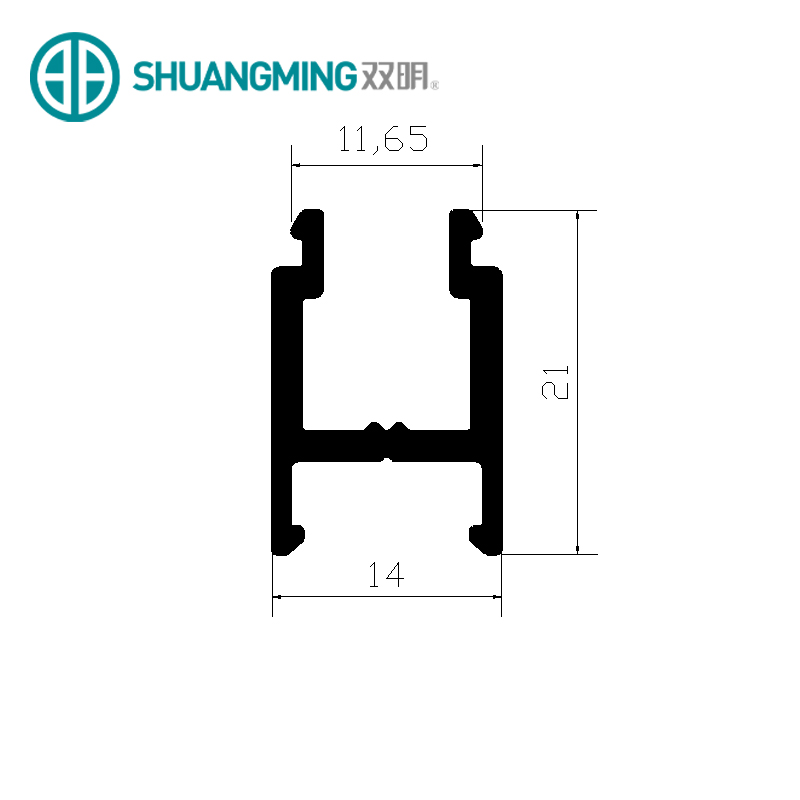
Modern architecture requires extreme extrusion flexibility. Achieving strict U-value targets necessitates customized shapes. A simple flat strip no longer suffices for high-performance windows. Common profiles include:
C-type: Used for standard insulation requirements and basic window systems.
I-type: Ideal for narrower cavities where space is highly restricted.
S-type: Designed to accommodate complex hardware channels and locking mechanisms.
Multi-cavity: Features complex internal webs to trap air and provide maximum thermal resistance.
Polyamide offers superior extrusion stability. Manufacturers can create highly precise, complex micro-structures within the plastic. PVC struggles to maintain tight dimensional tolerances in intricate multi-cavity designs. It often warps during the extrusion cooling phase.
Buyers must balance the initial price against long-term lifecycle value. We acknowledge PVC thermal strips carry a lower upfront material cost. They look attractive on an initial spreadsheet. However, hidden costs accumulate quickly. Specialized painting workflows increase factory labor expenses. Structural degradation leads to frequent and expensive warranty claims. Premature profile failure severely damages your brand reputation in the market.
Polyamide requires a higher initial investment. Yet, it delivers a vastly superior lifecycle value. It ensures long-term building code compliance. It reduces field maintenance and prevents costly system failures. You install it once, and it performs reliably for the lifespan of the building.
Use a strict shortlisting logic when selecting your material suppliers. Follow these actionable steps to ensure quality:
Verify the exact glass-fiber content. Ensure the polyamide blend contains exactly 25% glass fiber. This specific ratio guarantees optimal strength and thermal stability.
Request comprehensive dimensional tolerance data. Ask for documented tensile strength comparison tests. You must verify mechanical performance under simulated wind loads.
Ensure custom development capabilities. Check if the supplier handles custom shape development. Proprietary aluminum profile designs often require unique barrier geometries.
Evaluate extrusion precision and surface quality. Request physical samples to inspect the surface finish. Look for structural uniformity and an absence of warping.
Assess testing and certification transparency. Reliable suppliers readily provide material data sheets proving PA66 formulation standards.
Polyamide thermal break strips stand as the mandatory choice for demanding architectural projects. Commercial buildings, high-rises, and premium residential applications require absolute reliability. You simply cannot compromise on structural integrity and long-term energy compliance. While PVC offers tempting short-term savings, it introduces severe structural risks. Differential thermal expansion destroys the mechanical bond over time. PA66 GF25 guarantees unparalleled stability, streamlined manufacturing efficiency, and excellent insulation performance. Contact our engineering support team today for a detailed consultation. We can assist you with custom polyamide profiles and complex thermal modeling. We are also happy to provide comprehensive material data sheets and physical samples for your next major project.
A: Aluminum is a highly conductive metal that transfers heat quickly. The plastic strip acts as an insulating barrier. It stops conductive heat transfer between the outside and inside of a building. This improves energy efficiency and prevents interior condensation.
A: They can stop initial condensation temporarily. However, PVC degrades structurally over time due to intense thermal expansion differences. This degradation eventually breaks the seal, allowing air and moisture penetration. Polyamide maintains a tighter seal, making it a safer long-term choice against mold.
A: Shapes are customized based on specific architectural needs. I-type fits narrow spaces. C-type handles standard structural loads. S-type accommodates specific hardware channels. The exact choice depends on the required structural load, barrier width, and the aluminum cavity design.
A: Yes, PA66 is a fully recyclable thermoplastic. During the end-of-life processing of aluminum profiles, recycling facilities can separate the polyamide strips from the aluminum. Both materials can then enter their respective recycling streams, supporting sustainable construction practices.


