
Views: 0 Author: Site Editor Publish Time: 2026-03-18 Origin: Site


When customers ask us, “Does a thermal break strip work?”, they are usually asking a bigger question: Can this small component really make a meaningful difference in doors, windows, and curtain wall systems? The answer is yes—when the right strip is selected, processed correctly, and matched to the frame system, a thermal isolation strip plays a very real role in reducing heat transfer through aluminum profiles. It may be small in size, but it is one of the key structural elements behind modern thermally improved aluminum systems.
At Shuangming Plastic, we work with customers who need more than a theoretical answer. They want to know whether a thermal isolation strip actually improves product performance in real manufacturing and real buildings. In practice, the value of a thermal break strip is not only about “insulation” in a general sense. It is about interrupting the direct heat conduction path in metal frames, helping the whole system perform more efficiently, more comfortably, and more competitively in modern construction markets.
In this article, we will explain how a thermal isolation strip works, why it matters in aluminum doors and windows, what performance benefits it supports, and what factors determine whether it performs well in real use.
A thermal isolation strip—also commonly called a thermal break strip—is a non-metallic connecting component used inside thermally broken aluminum profiles. Its job is to separate the inner and outer aluminum sections of the frame so heat cannot transfer as easily through the metal.
Without this strip, the aluminum frame forms a continuous conductive path. Because aluminum transfers heat quickly, that continuous path allows outside temperature to affect the indoor side more easily. A thermal isolation strip interrupts that path.
In simple terms, it works like this:
the outer aluminum profile is exposed to outdoor conditions
the inner aluminum profile faces the indoor side
the thermal isolation strip sits between them as a lower-conductivity barrier
This helps reduce direct heat flow through the frame structure.
Yes, it does—but its real effectiveness depends on how it is used in the profile system.
A thermal isolation strip works because it replaces part of the direct metal-to-metal connection with a material that transfers heat much less efficiently than aluminum. Since aluminum is highly conductive, even a relatively narrow non-metallic barrier can significantly improve the thermal behavior of the frame when designed correctly.
That means a thermal break strip can help:
reduce heat transfer through the frame
improve the thermal performance of aluminum systems
support more stable indoor-side frame temperatures
improve the overall efficiency of doors, windows, and curtain walls
The key point is that the strip is not working alone. It works as part of a complete profile design. A well-designed thermal break system combines:
the right strip material
the right strip dimensions
correct rolling/crimping process
compatible aluminum profile design
When these are matched properly, the strip is highly effective.
Aluminum is popular in architecture because it is:
strong
lightweight
durable
easy to fabricate
visually clean and modern
However, aluminum also transfers heat quickly. That means a plain non-thermally-broken aluminum frame can allow outside temperature to pass through the metal frame much more easily than people expect.
This can affect the system in several ways:
the frame may feel hotter or colder depending on weather
the overall thermal performance of the window or door is reduced
the glazing may perform well, but the frame becomes the weaker part of the system
That is why a thermal isolation strip is so important. It helps aluminum keep its structural and design advantages while improving frame performance.
The main job of the strip is to interrupt the direct conductive path between the inner and outer aluminum sections.
Without a strip:
heat can move through continuous metal more easily
With a strip:
the conductive path is broken
thermal transfer is reduced
the frame performs more efficiently
This is the core reason thermal break strips work.
In modern building systems, frame performance matters much more than it used to. Buyers no longer look only at glass or appearance. They also evaluate how the entire system performs.
A thermal isolation strip helps aluminum profiles better support:
improved thermal system values
better overall energy-conscious design goals
stronger competitiveness in higher-performance building markets
In other words, it helps aluminum systems meet higher expectations instead of being limited by metal conductivity.
While comfort depends on the complete system design, a thermally improved frame generally supports a more stable interior-side experience than a fully conductive metal frame.
This can help the finished product feel more balanced in use, especially in projects where frame performance is closely watched.
The strip itself is a hidden component, but its effect contributes to how the final window or door performs as a whole.
A thermal break strip is not only a technical component—it is also a product-upgrade component.
For manufacturers, using a thermal isolation strip can help turn a basic aluminum profile into a higher-value system by supporting:
improved thermal positioning
stronger product differentiation
compatibility with more performance-focused projects
better alignment with modern market demand
That makes it valuable not only technically, but commercially as well.
Frame Type | Heat Transfer Path | Thermal Performance | Typical Product Positioning |
Non-thermal aluminum frame | Continuous metal path | Lower | Basic applications |
Thermal break aluminum frame | Interrupted by thermal isolation strip | Improved | Higher-performance systems |
This comparison is simple, but it explains the core principle: the strip works by interrupting the direct conductive metal path.
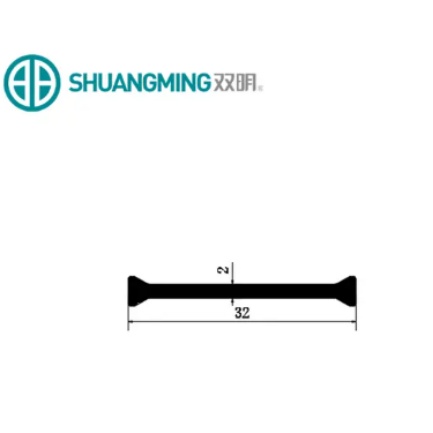
A thermal isolation strip works best when several factors are handled correctly.
The strip material must be suitable for structural use inside the profile system. It needs to provide both thermal separation and dependable mechanical performance during processing and service life.
A lower-quality strip may reduce confidence in:
long-term structural stability
processing consistency
dimensional reliability
So yes, the strip concept works—but material quality still matters.
Strip width, shape, and profile compatibility all affect performance. A strip that is too narrow, mismatched, or poorly selected may not support the intended profile structure properly.
The strip must be chosen to match:
the aluminum profile design
target performance level
processing requirements
The right dimensions help the thermal break system work as intended.
Even a high-quality strip can underperform if it is not processed correctly. In thermally broken aluminum production, the strip must be accurately inserted and rolled/crimped into the aluminum profile.
If the assembly process is poor, problems may appear in:
structural connection quality
alignment
consistency
final product stability
So the answer is not only “Does the strip work?” but also “Was it processed correctly?”
A thermal isolation strip improves the frame, but it does not replace the need for good overall design. Final system performance also depends on:
profile design
sealing structure
glazing configuration
fabrication quality
installation quality
The strip is one key part of a larger performance system.
So, does a thermal break strip work? Yes—it works by interrupting the direct heat transfer path through aluminum frames, helping improve the thermal performance of the overall system. For aluminum windows, doors, and curtain walls, a thermal isolation strip is one of the key components that makes thermally improved frame design possible.
Its value comes not only from the concept itself, but from how well it is selected, matched, and processed in the final profile structure. When those factors are handled correctly, the strip becomes a small component with a very important role in modern building systems.
To learn more about thermal isolation strip solutions and profile-compatible product options, you are welcome to visit www.shuangming-plastic.com. We believe the best thermal break systems begin with reliable strip quality, stable dimensions, and practical compatibility with real aluminum profile production.
A thermal isolation strip separates the inner and outer aluminum sections of a profile to reduce direct heat transfer through the frame.
Yes. It helps improve the thermal performance of the aluminum frame by interrupting the continuous metal conduction path.
No. It is an important part of the system, but final performance also depends on profile design, seals, glazing, fabrication, and installation.
It is commonly used in thermally broken aluminum windows, doors, sliding systems, curtain walls, and façade profile systems.

